
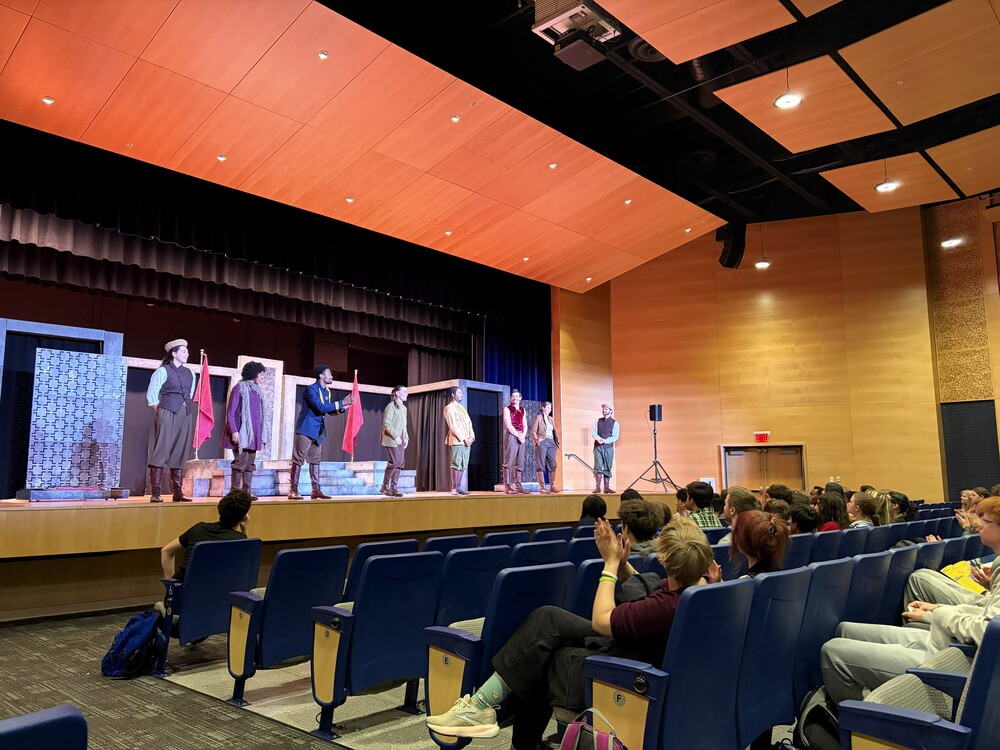
On Friday, October 9, Quakertown Community High School (QCHS) students welcomed the professional actors and teaching artists of the Linny Fowler WillPower Tour to the QPAC for an immersive day exploring William Shakespeare’s The Tragedy of Julius Caesar.
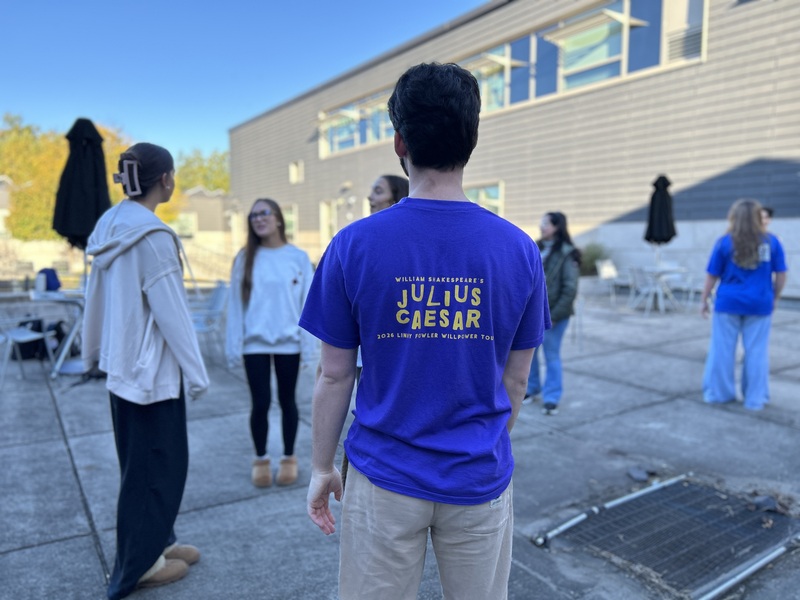
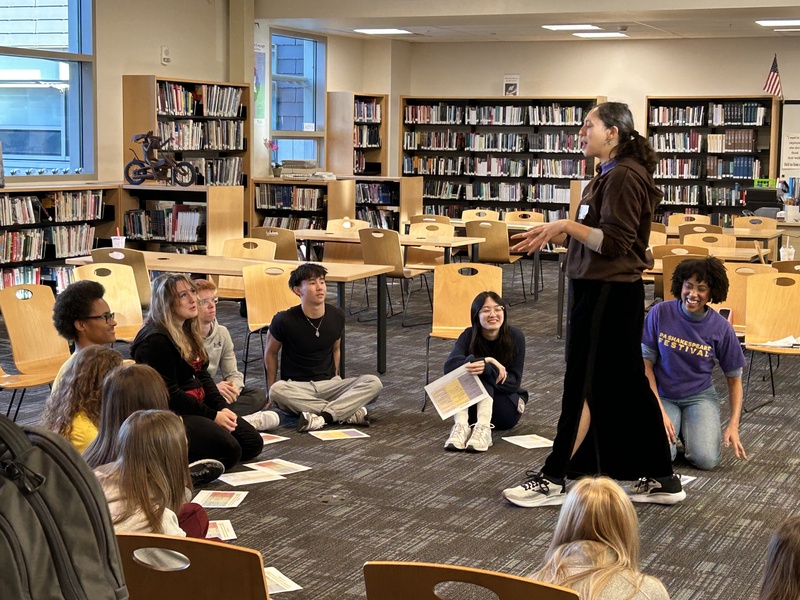
The WillPower Tour, an educational touring program of the Pennsylvania Shakespeare Festival, brings fully professional theatrical productions directly to middle and high school students. Beyond watching the performance, QCHS students participated in interactive workshops led by the WillPower performers, gaining firsthand insight into the complexities of Shakespeare’s work through acting fundamentals, character development, persuasive language, and stage combat.
The first workshop explored the power of persuasion. In The Tragedy of Julius Caesar, characters use language, emotion, and performance to influence those around them. Through physical exercises, script and character analysis, and improvisation, students explored Shakespeare’s language, experimented with rhetorical choices, and discovered how quickly words can sway a crowd. They saw these lessons come to life during the performance, when actors entered the audience and encouraged students to join their chants and become part of the action.
The second workshop focused on the actor’s most expressive tool: the body. Students examined how posture, movement, and body language can communicate emotion, establish a character, and tell a story without a single word.
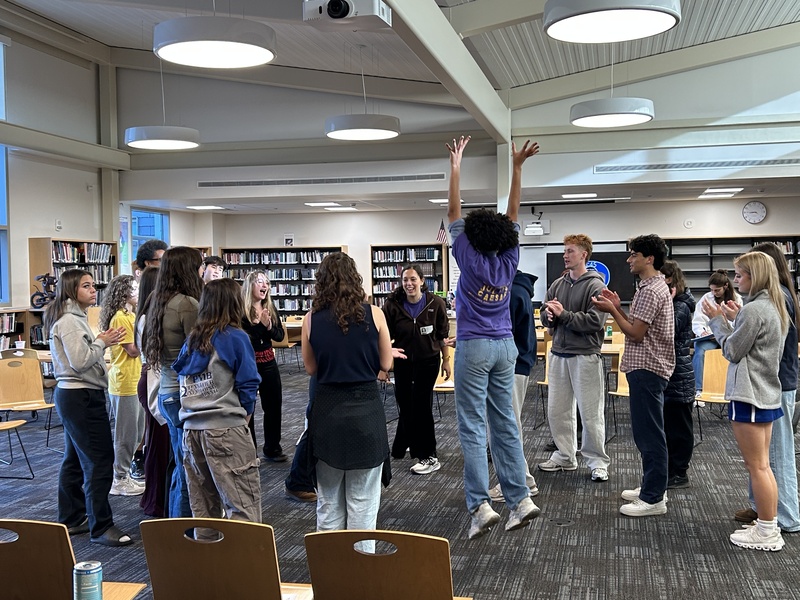
The third workshop examined the power of Shakespeare’s words. Students explored how characters use language to persuade, manipulate, and challenge one another. By examining the objectives and tactics behind the dialogue, they gained insight into the play’s rhetoric and discovered how an actor’s delivery can influence an audience, shape a conflict, and ultimately help a character achieve a goal.
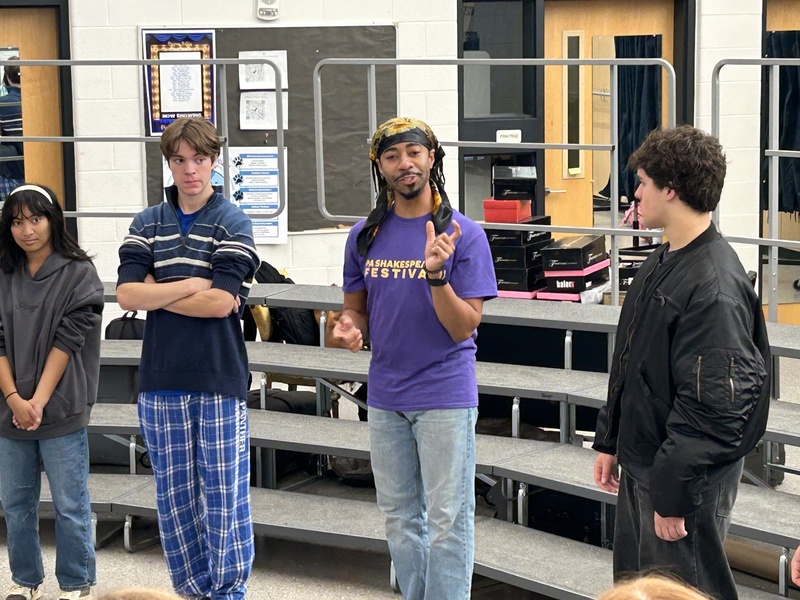
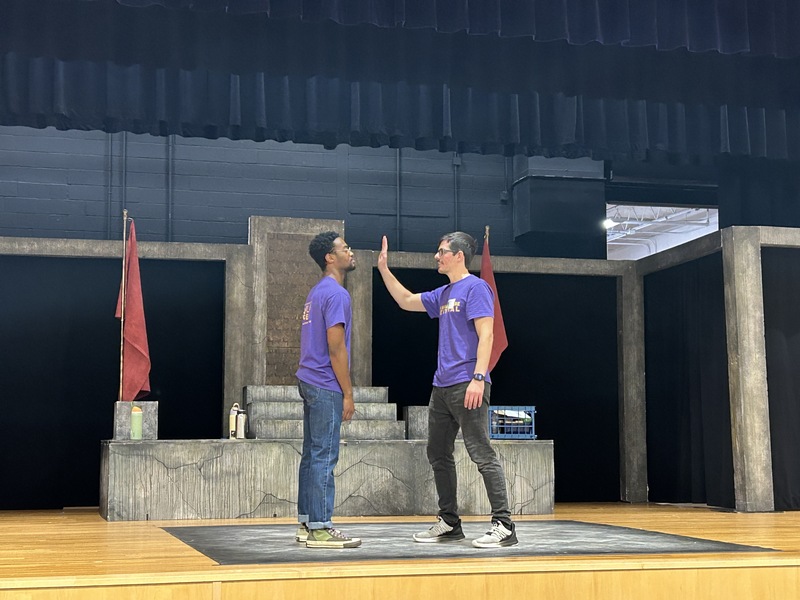
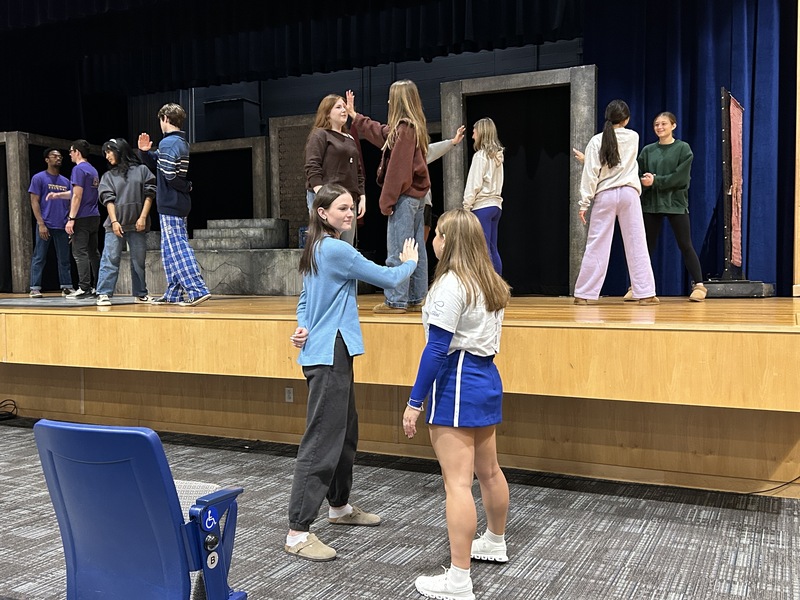
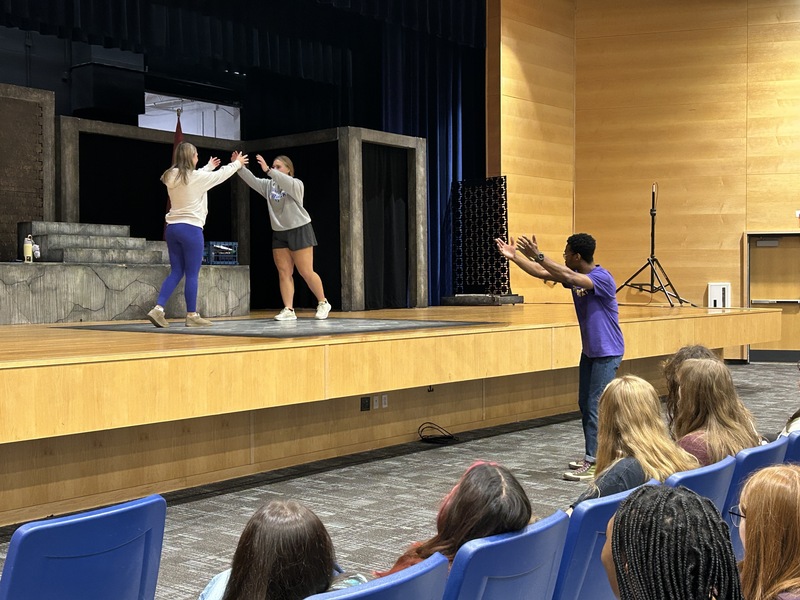
The fourth and final workshop introduced students to the fundamentals of stage combat. Through guided exercises, students practiced techniques such as the stage slap and stage fall, learning how actors create convincing moments of confrontation while maintaining control, precision, and trust. The workshop highlighted the contrast between the discipline and coordination required to perform stage combat safely and the chaos, passion, and violence that unfold throughout the play.
Then came the performance!
Students watched as their workshop instructors took the stage to bring The Tragedy of Julius Caesar to life. The concepts they had explored throughout the day unfolded before their eyes as characters manipulated one another, wrestled with their moral convictions, rallied crowds through powerful speeches, and ultimately descended into betrayal and bloody conflict. The performance transformed the lessons of each workshop into a compelling theatrical experience, allowing students to recognize the techniques they had practiced and see how they worked together to tell Shakespeare’s story.
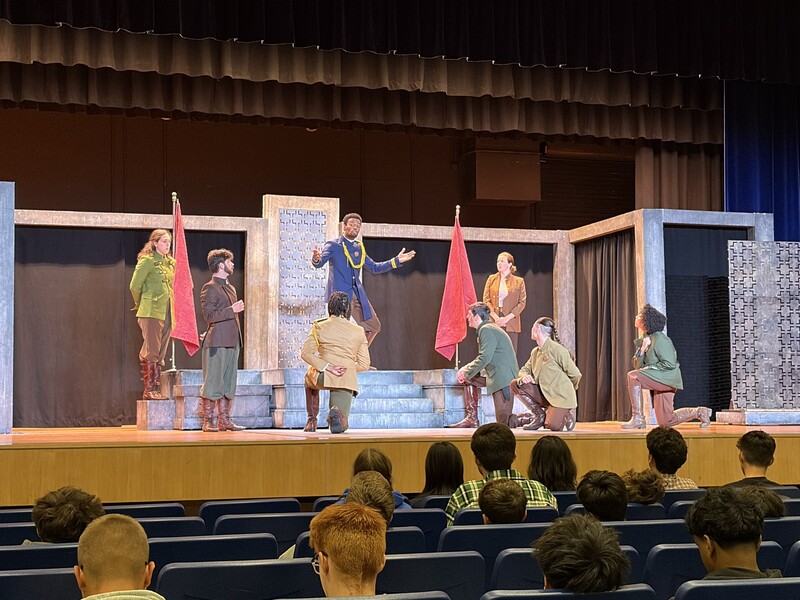
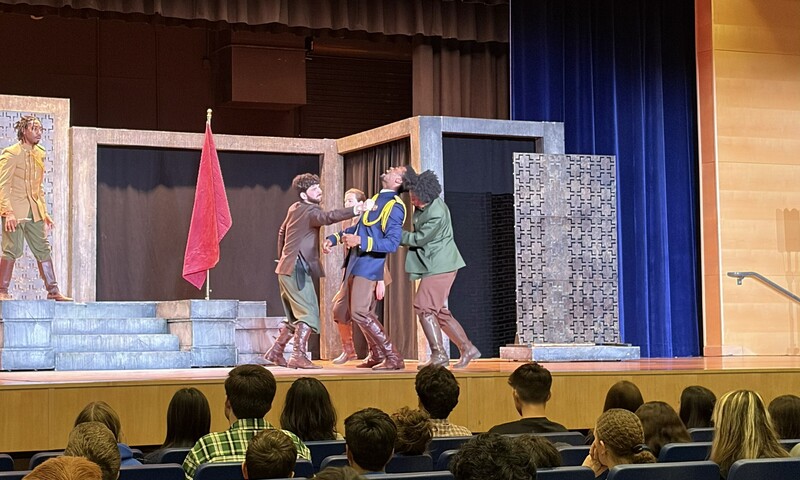
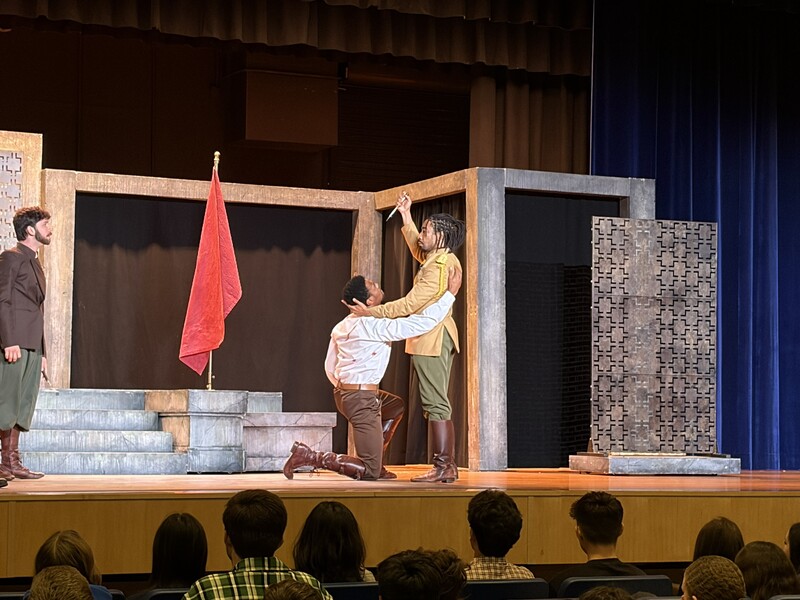
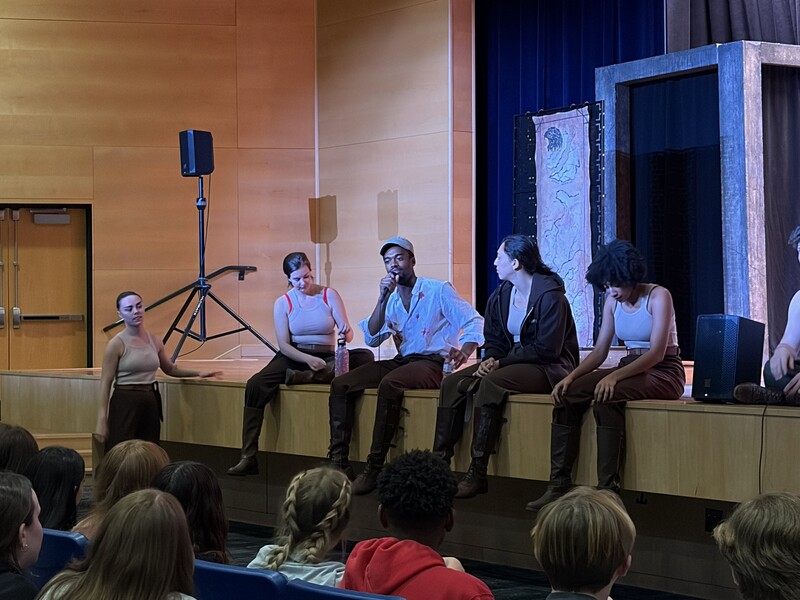
Following the performance, students participated in a talkback session, asking the actors questions about their roles, performance choices, and experiences as professional artists. The conversation offered one final opportunity to connect the creative process with the production they had just witnessed.
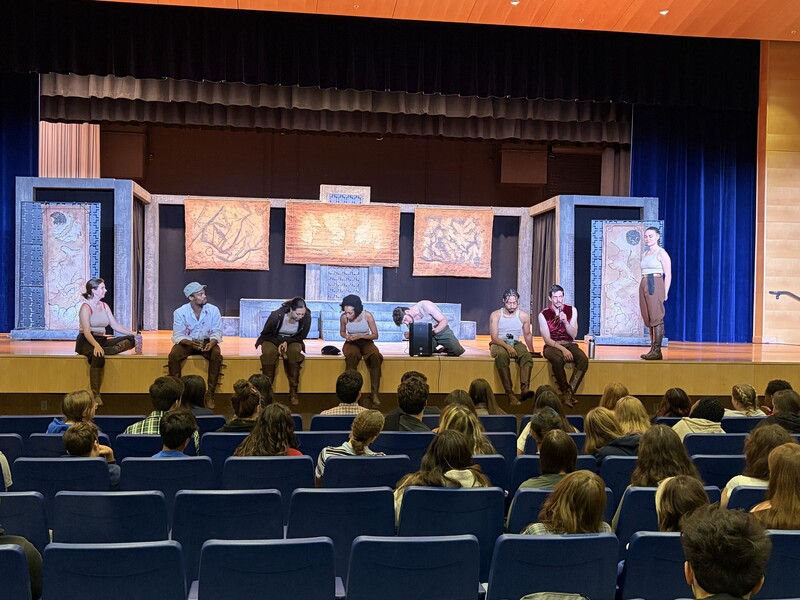
For QCHS students, this was far more than reading Shakespeare or studying a play in a textbook. It was an opportunity to step inside the story, learn directly from professional artists, and experience the power of live theater firsthand. By moving from the workshop floor to the audience and watching their lessons unfold onstage, students discovered how language, movement, emotion, and collaboration can transform words on a page into a living, breathing story. It was the kind of immersive experience that extends learning beyond the classroom walls—one that invites students not just to study Shakespeare, but to feel his work, question its characters, and witness the enduring power of storytelling come alive right before their eyes.